
Most material decisions are made without most of the information
The person choosing a material is rarely a materials scientist. They are an engineer with a spec to meet and a supplier catalogue that answers one question out of the ten that matter, while the knowledge that would settle the decision is usually sitting in another industry's literature or a measurement nobody has taken yet. Elixir exists so that decision can be made with the whole picture.
Millions of materials. Every value carries its source and our confidence in it.
Seven questions, one answered
Ask an engineer why they chose a material and you get a property value and a datasheet. Ask what happens to that choice eighteen months later, and the answer is often a redesign, because a decision that holds up has to clear questions that sit in different disciplines and departments:
- Scientific.Does the property hold under the real operating conditions, not the test conditions?
- Engineering.What happens to that performance inside the system, next to the other materials it touches?
- Form factor.Does it exist as a powder, a foil, a coating, a sintered part? At the volume you need?
- Supply and cost.Is it available, at what price, from how many sources, under what geopolitical exposure?
- Regulatory and benchmark.Where does it sit against the standard your industry actually enforces?
- Competitive.What are the teams solving your problem in adjacent industries already using?
- Frontier.How far is this from the best thing known, and is the gap worth closing?
One person is rarely equipped to answer all seven, so the decision gets made on the one that is measurable, and the rest shows up later as a redesign.
Team
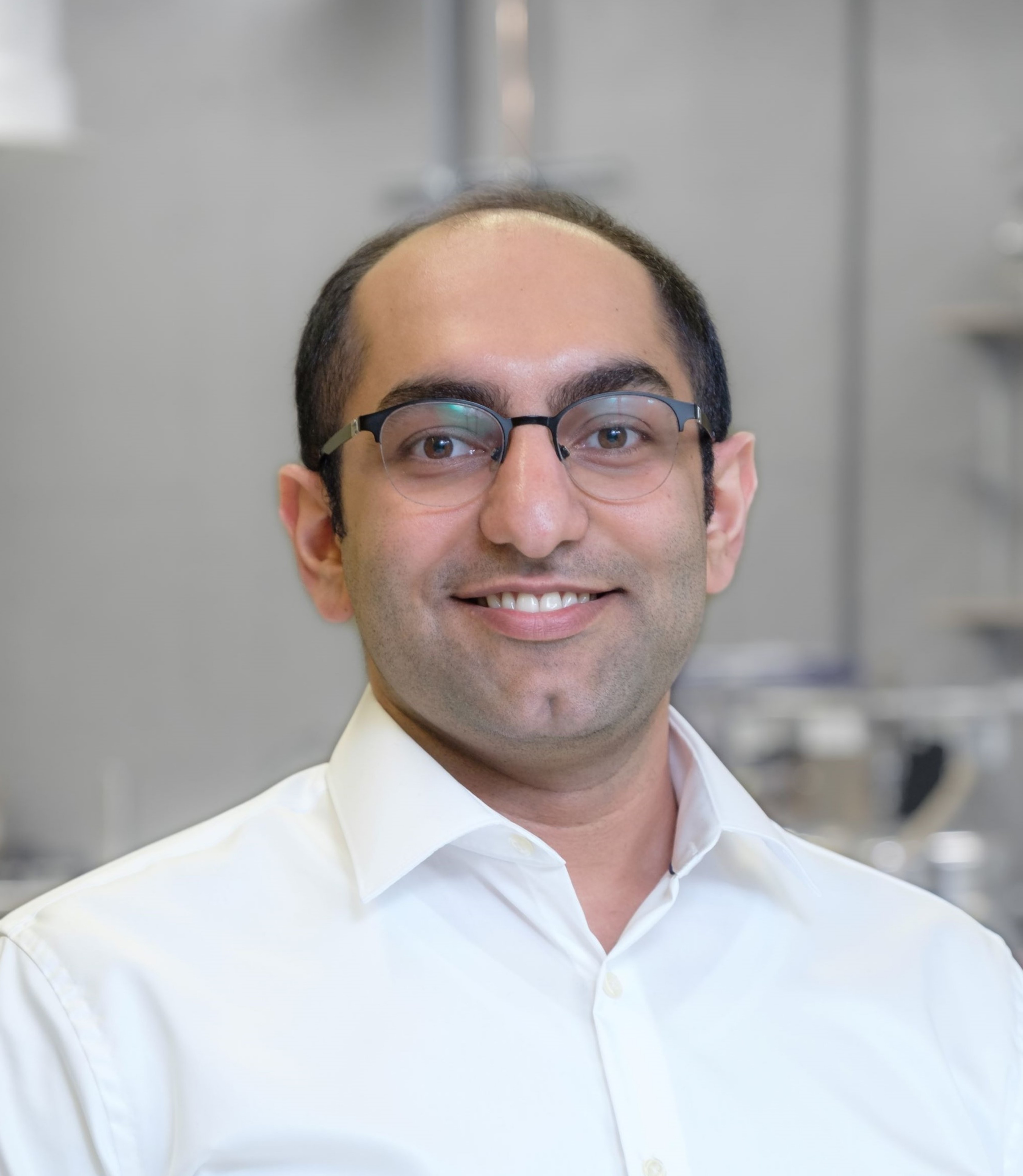



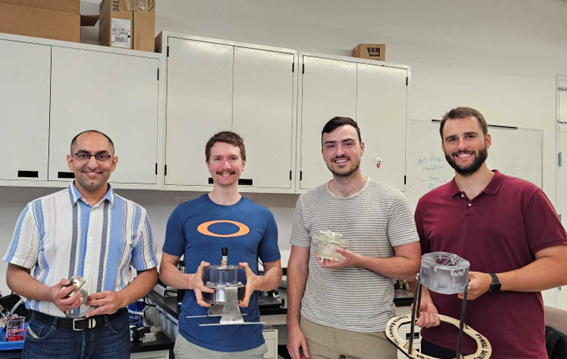
Our team has grown with research interns from Mila, Université de Montréal, McGill and Université de Sherbrooke. Past collaborators are listed below.








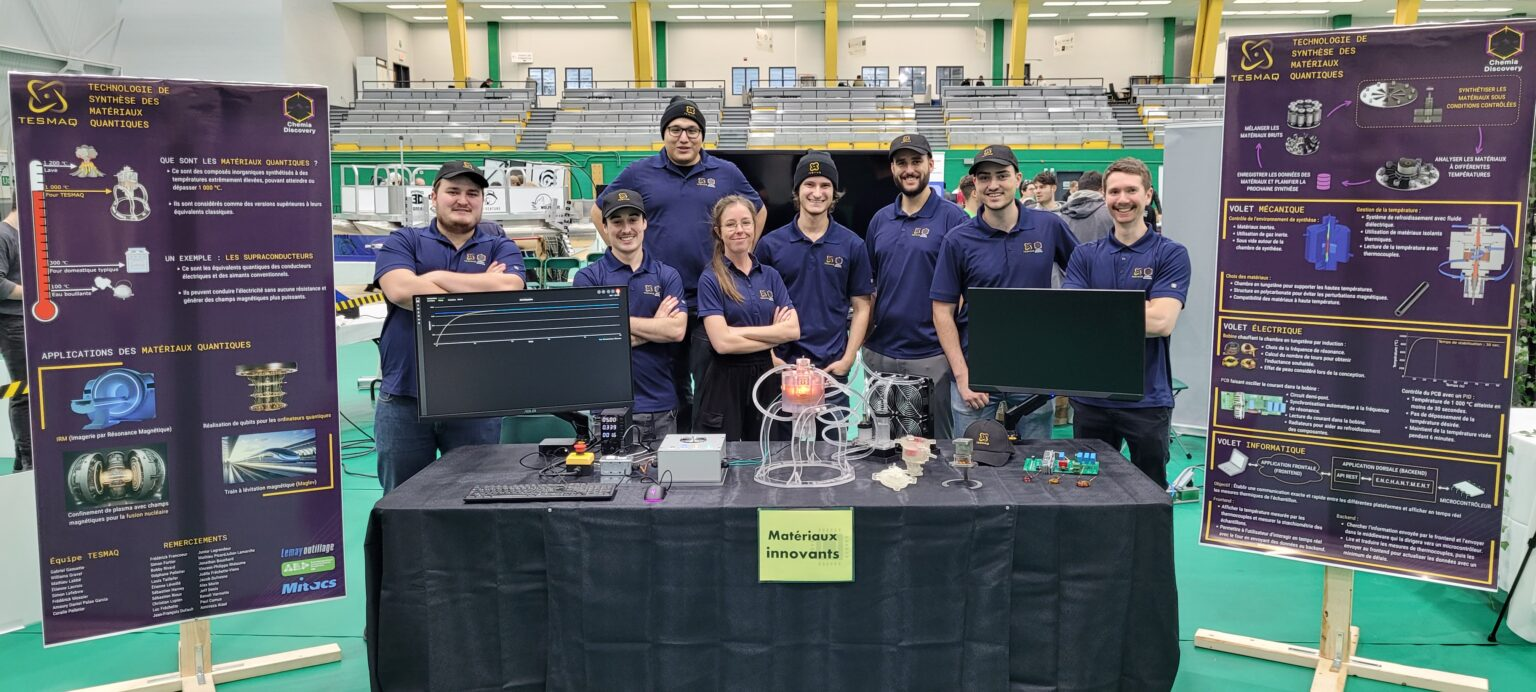
Chemia has grown with the support of programs including Next AI, Plug and Play and ACET.
If one company connects all of it, the terms matter
A platform that reads across every industry raises two fair questions, and you should ask them of anyone in this space, including us.
- Are you locking up public knowledge?No. What is public stays public. Everything our pipelines extract from open, commercially compliant sources feeds a shared knowledge base available to everyone who uses Elixir.
- Are you leaking private knowledge?No. What a client shares privately stays private, used only to sharpen that client's results, never folded into the common pool or surfaced to anyone else.
The value we add is the connection and the reasoning on top, not ownership of what the field already knows.
Predict. Reason. Discover.
Elixir is not a database you search. It is a reasoning engine that works across industries and carries the provenance and confidence of every value.
Predict
Machine learning models fill the gaps across millions of materials, predicting properties even where no measurement exists. This is where we are strongest today.
Reason
An ontology connects materials, properties, operating conditions and failure modes, so Elixir can weigh trade-offs and trace a failure back to its cause.
Discover
Constrained generative models propose new structures and designs as hypotheses, tested against reliability targets and checked with first-principles calculations before we trust them.
Elixir answers the scientific and engineering questions today, in production. Supply exposure, benchmark position and frontier distance are being built into the same reasoning layer.
A prediction is only useful if you can trace it
Every value in Elixir carries its origin and our confidence in it. We never quietly mix a predicted number with a measured one:
- Measured
- ›
- Computed
- ›
- Model-predicted
- ›
- Literature-extracted
Elixir does not certify materials or replace your testing. It changes what you choose to test, with confidence bounds on every prediction, and our scientists stay in the loop where it matters.
Months of measurement, answered before they started
A specialty chemical manufacturer came to us during the development of new CO2 capture materials, needing months of measurement to confirm candidates that were likely to fail anyway. We predicted the same properties computationally, at the operating conditions that mattered, and let the team eliminate the losing candidates before the lab work began.
Read the full story, and how we validate these models, on our blog
Tell us the material problem in plain language.
Describe the constraints and get back a ranked shortlist with the evidence behind each candidate, what would rule it out, and what to test next.